

The short answer: a small-tire size reads height x width - rim in inches (23x10.50-12 is 23″ tall, 10.5″ wide, on a 12″ rim), a two-number size like 4.80-8 reads width - rim, and an old tractor size like 6-12 reads the same way in an earlier shorthand. Match the numbers on your sidewall digit-for-digit and you’ve ordered the right tire.
Those three patterns are three different sizing systems — lawn, garden, and antique-tractor tires use all of them, which is why none look like the numbers on a car tire. Here’s how to tell which one you’re holding.
Where the size is printed
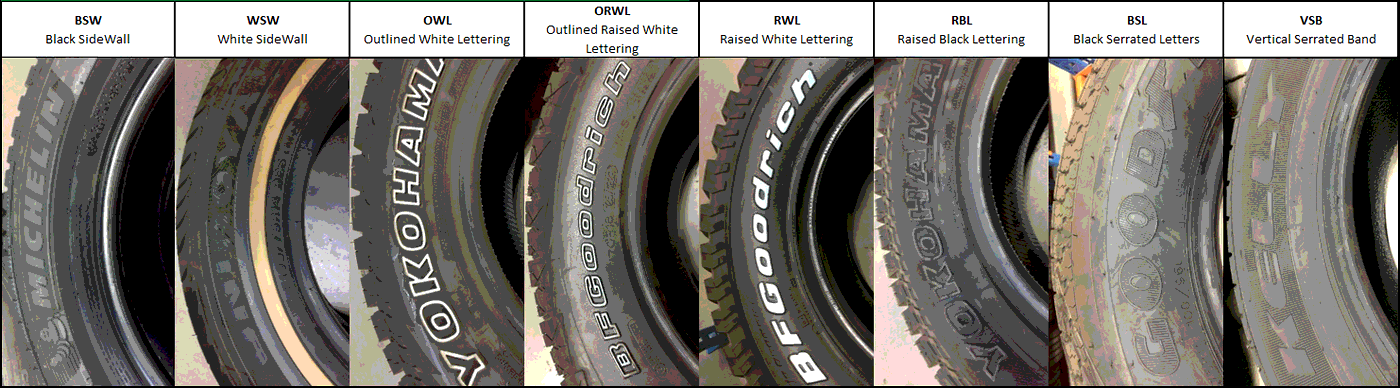
The size is molded into the sidewall — the flat outer face of the tire, not the tread. It’s usually the largest set of numbers, often near the brand and model name. If the sidewall is worn smooth or caked in mud, check the other side; manufacturers mold the size on both. On a machine you can’t easily flip, the number is still readable with the tire on the rim — rotate the wheel until it comes around.
The three sizing systems you’ll actually run into
1. Overall-diameter sizing (three numbers)
This is the most common format on modern mower and garden-tractor tires, and it’s the easiest one to read because every number is a real measurement in inches. Take 23x10.50-12:
| Number | What it means |
|---|---|
| 23 | Overall diameter — the tire is 23 inches tall, inflated and unloaded. |
| 10.50 | Section width — 10.5 inches across the widest part of the tire. |
| 12 | Rim diameter — it mounts on a 12-inch wheel. |
The pattern is always diameter x width - rim. So 18x8.50-8 is an 18-inch-tall, 8.5-inch-wide tire on an 8-inch rim; 20x10.00-10 is 20 tall, 10 wide, on a 10-inch rim. This is the format you’ll see on the sidewall of nearly every zero-turn and lawn-tractor tire built in the last few decades.
2. Two-number farm sizing (the “weird” one)
This is the format that trips people up, and it’s the one you’ll meet on older garden tractors and ag tires: something like 6-12 or 9.5-24. There are only two numbers because the diameter is left out — it wasn’t standardized when the system was created.
| Number | What it means |
|---|---|
| 6 | Section width — the tire is roughly 6 inches wide. |
| 12 | Rim diameter — it mounts on a 12-inch wheel. |
The overall height isn’t in the number at all — it depends on the tread pattern and the aspect ratio the manufacturer chose. That’s why two “6-12” tires from different makers can stand at slightly different heights. When you’re matching a two-number ag size, width and rim have to match exactly; height you confirm by measuring the old tire or checking the spec sheet.
3. Slashed sizes (4.80/4.00-8)
A size like 4.80/4.00-8 shows up on small front tires and hand-truck-style wheels. The slash isn’t a fraction — it’s two width measurements for the same casing:
- 4.80 — the section width when the tire is mounted and inflated.
- 4.00 — the width of the tread/rim contact, a holdover from the tire’s original spec.
- 8 — the rim diameter, same as always.
For fitment purposes, treat it as an 8-inch-rim tire in the ~4.8-inch-wide class. A tire marked 4.80/4.00-8 and one marked plain 4.80-8 are interchangeable on the same wheel.
Ply rating: the number that isn’t about size
Once the size matches, the second thing on the sidewall worth reading is the ply rating — often shown as 4PR, 6PR, or a letter load range (B = 4-ply equivalent, C = 6-ply, D = 8-ply). It has nothing to do with whether a tire fits; it’s how much load and abuse the casing takes.
Matching a replacement without guessing
- Read the full size off the sidewall and note which of the three systems it’s in.
- Match rim diameter first — it’s non-negotiable. An 8-inch tire will not go on a 12-inch wheel, ever.
- Match width next. A little wider or narrower is sometimes tolerable on a mower, but staying on-size keeps the speedometer, deck clearance, and handling honest.
- Confirm height — automatic on three-number sizes, worth a tape measure on two-number ag sizes.
- Pick your ply rating for the load, and your tread (turf, lug, or rib) for the terrain.
If your size is one we stock, the fastest path is our shop-by-size finder — every seeded size has its own page with the tires we carry at that size, the common ply ratings, and which machines run it. Check the 23x10.50-12 page — it’s our highest-volume size — or 16x6.50-8 if you’re chasing a smaller front size instead.
Common questions
Ready to shop?
When you know the answer
Find tires for your machine
Fitment-checked tires by make and model, shipped from Cleveland.
