
The short answer: a Farmall Cub runs 4.00-12 fronts and 8.3-24 rears (9.5-24 is common on later machines and restorations). A Farmall Super A runs 5.00-15 fronts and 9.00-24 rears — and if your Super A’s rear sidewall just says “9-24,” that’s the same size in older shorthand. If you only came for the numbers, there they are.
Stick around for the part most listings skip: which tread actually suits a cultivating tractor, and what seventy-odd years do to the rims underneath.
The tractors built around a sightline
The Cub and the Super A share a party trick no modern machine bothers with: the whole engine sits offset to the left so the operator can look straight down at the row he’s cultivating. IH called it Cultivision, and it’s why these two never really died — they were purpose-built for the small vegetable patch, the tobacco row, the market garden, and that work still exists. The Cub ran from 1947 all the way to 1979; the Super A from 1947 to 1954. Most of the ones we shoe today are doing some mix of parade duty and actual garden work, which matters for the tread call below.
The factory sizes
Farmall Cub (1947–1979)
- Front
- 4.00-12
- Rear
- 8.3-24 (9.5-24 on later/restoration spec)
Farmall Super A (1947–1954)
- Front
- 5.00-15
- Rear
- 9.00-24 (marked “9-24” on older sidewalls)
Go 4-ply at every position on both machines. And a warning earned from a lot of phone calls: after decades of owners, plenty of Cubs are wearing the wider 9.5-24 rear and plenty of tractors are wearing wheels off something else entirely. Thirty seconds reading the sidewall — or our size-decoding guide if the markings have you squinting — beats a return shipment every time.
Tread: a cultivating tractor wants ribs and lugs
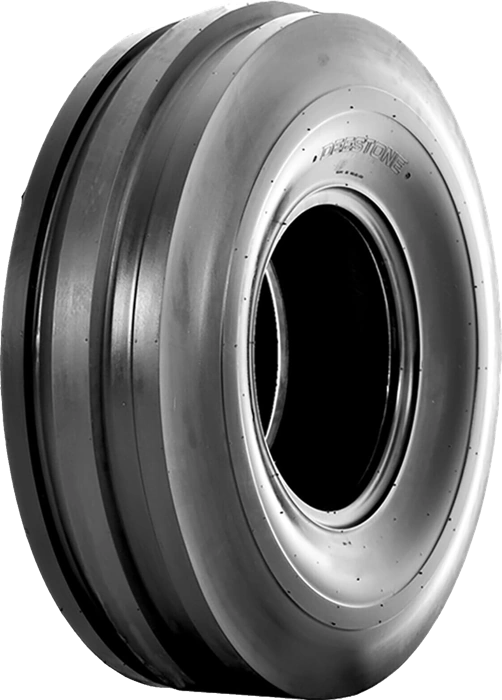
These machines came from the factory the way working row-crop tractors always did: rib tread up front, chevron lug in back. The ribs give steering bite in loose worked soil — no power steering on either machine, so the front tread does that job alone — and the lugs put the little engine’s pull into the ground. We stock the Deestone D401 tri-rib front for exactly this, and it’s the correct look besides. The 24-inch rear lugs aren’t shelf items for us — we source them through the same importers on about a week’s turnaround, so call first and plan the project around that. If your machine only mows and parades, the factory pattern is still the right buy — it’s period-correct and it works. The one swap that rarely makes sense here is turf tread; a Cub on turfs is a lawn ornament that slips. (Our tri-rib guide goes deeper on the front-tread question.)
Tubes, stems, and the rims underneath
Both machines predate tubeless. Run tubes at all four corners — on the 24-inch rears that usually means the heavier TR-15 ag valve stem; the small fronts take the common TR-13. One stocking note for Super A owners: the 15-inch front tube is typically sold as a 400/500-15 combo tube, which covers the factory 5.00-15 and the 4.00-15 pattern with one part number. Tubes live on our inner tubes page. And before you mount anything, look hard at the bead seat on those rims — if there’s rust pitting where the tire seals, Greg’s old-rim guide will tell you whether the wheel is worth saving. Sometimes it isn’t, and it’s cheaper to hear that before the tire’s mounted.
The order, start to finish
- Read all four sidewalls. Cubs especially wander from factory spec over the decades.
- Front: 4.00-12 tri-rib for the Cub, 5.00-15 tri-rib for the Super A.
- Rear: AG lug in your confirmed size, 4-ply.
- Tubes for every position — TR-15 stems on the rears.
Both machines have fitment pages that pair the factory sizes with what’s on our Cleveland shelves: Farmall Cub and Farmall Super A.
Common questions
Tires in this guide
Sold and shipped by Greater Cleveland Tire — from our Cleveland warehouse in one business day.
Front pick