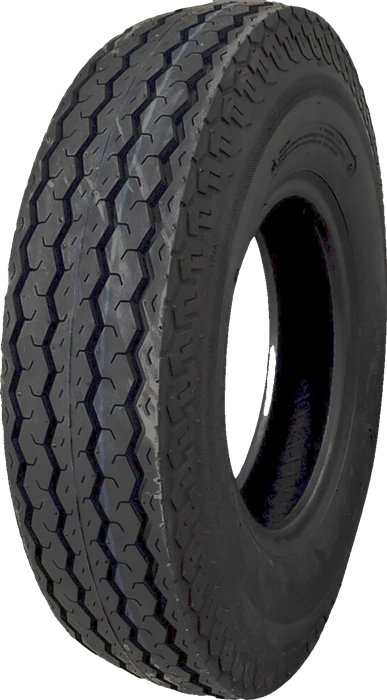

The short answer: old tractors wear ribbed front tires because they have no power steering — the raised ribs slice into loose ground and give the front end something to steer with. Three ribs, four, five: same idea, different rib spacing for different ground. If your tractor came with ribs and still does tractor work, replace them with ribs. It’s one of the few cases where the period-correct part and the correct part are the same part.
Here’s why the tread works, how to pick a rib count, and the honest cases where a modern owner should skip ribs entirely.
Why steering used to be a tread problem
On anything built before power steering, turning the wheel just asks the front tires to change direction — whether the tractor actually turns depends on those tires finding grip. On pavement that’s easy. In loose dirt, a worked field, or a gravel lane, a smooth or blocky tire skates and the tractor pushes straight ahead like a shopping cart with a bad wheel. A ribbed tire fixes that mechanically: tall, continuous ribs run around the circumference, and their edges bite the ground sideways — like a boat keel — resisting the skate and turning steering effort into actual turning. Farmers also cared that ribs roll clean between crop rows without tearing anything up. Traction to pull was the rear tires’ job; the fronts had exactly one job, and ribs did it.
Three ribs or five? What the count changes
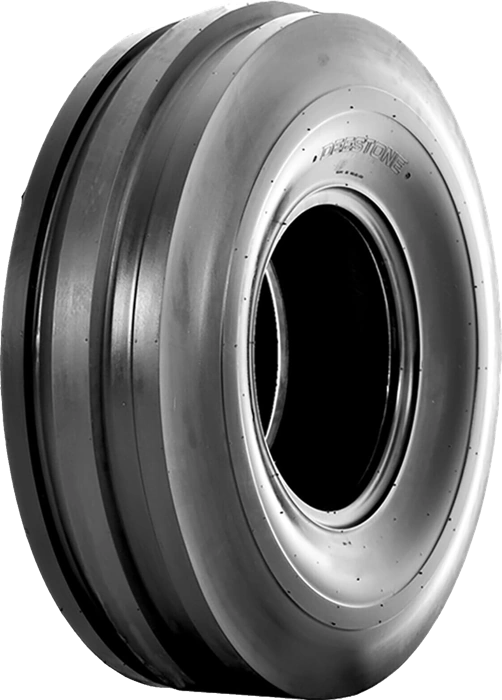
Tri-rib (3-rib)
- Character
- Tall center rib, wide gaps, deepest bite
- Where it shines
- Loose soil, tilled ground, sandy lanes — the classic worked-farm front, and the period look for most antiques
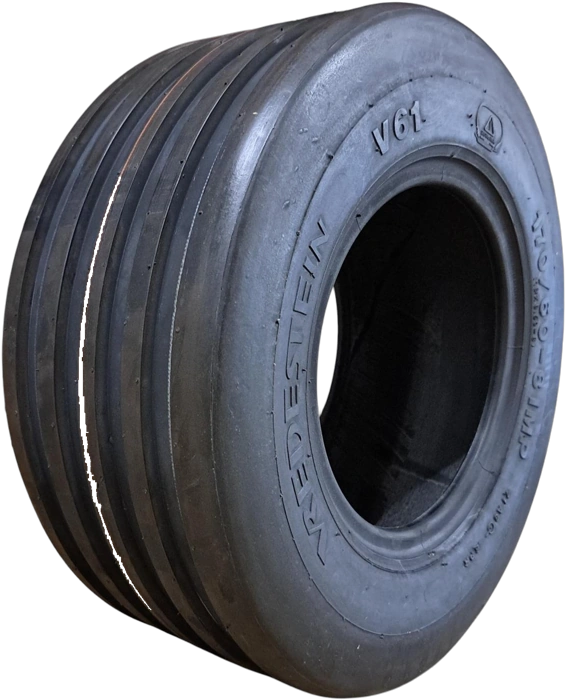
4–5 rib
- Character
- Shorter, closer ribs, more rubber on the ground
- Where it shines
- Harder surfaces and mixed duty — steadier on gravel and pavement, wears slower, a touch less bite in soft dirt
Neither is “better” — it’s soft-ground bite versus hard-ground manners. A tractor that lives in a garden plot wants the tri-rib’s deep edges. One that spends half its life rolling down a township road to get to the work will be happier on more ribs and more rubber. On our shelves the tractor end of that story is the Deestone D401 tri-rib — our go-to front for antique restorations, stocked in common antique front sizes like 4.00-12, 5.00-15, and 5.50-16. The multi-rib end is the Vredestein V61, the European-built rib with a devoted following — we carry it in garden-tractor front sizes like 16x6.50-8 and 18x8.50-8. All of it ships from Cleveland in a business day.
The machines that made ribs famous
If you own almost any working antique, ribs are your factory front. The Ford 8N and 9N steered their whole careers on them, and the cultivating Farmalls — the Cub and Super A — depended on rib fronts to track straight between vegetable rows with the operator watching the row, not the wheel. Full sizing for each machine is in those fitment guides; the short version is that the front size is stamped on your sidewall and our size guide decodes it in a minute.
Keep ribs, or switch? The honest cases
Ribs earn their keep when the ground is loose and the steering is manual. They stop earning it in a few specific situations:
- Mostly mowing lawn? Rib edges can score soft turf on tight turns. If your old tractor has retired to grass duty, a turf-pattern front is kinder to the lawn — the trade-offs live in our turf vs. lug guide.
- Mostly pavement or hard gravel? A tall tri-rib center rib wears fast on hard surfaces. Go to a 4–5 rib, which spreads the load, or a highway-rib pattern like the Deestone D901 if the machine mostly commutes.
- Front-end loader on a newer compact? That’s a different conversation — loader work wants industrial or ag fronts rated for the load, not a steering tread.
Everything else — plot work, parades, pulls, restoration — keep the ribs, and browse the rest of our tractor tires lineup for whatever the rear axle needs too. Our take, after twenty-two years of this question: “If the steering wheel fights you, the answer is almost never a wider tire. It’s a rib that actually bites.”
Common questions
Tires in this guide
Sold and shipped by Greater Cleveland Tire — from our Cleveland warehouse in one business day.
The standard tri-rib
European 5-rib
Highway-rib alternative