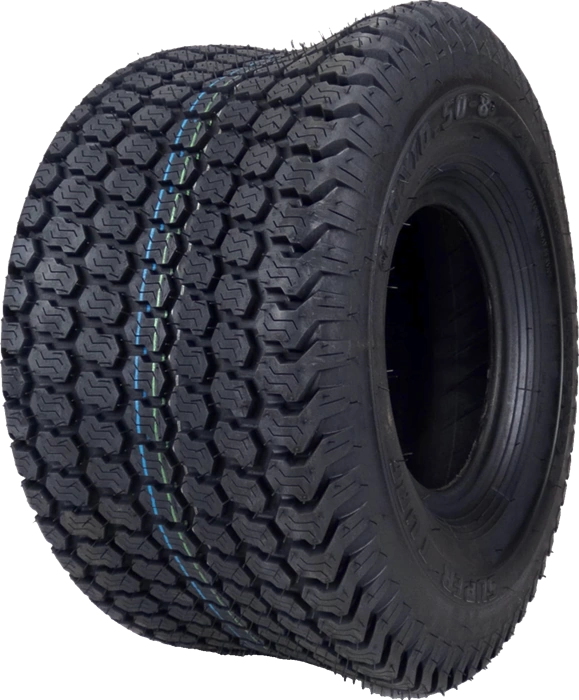

The short answer: turf tires are for grass you want to keep looking good. Lug (AG) tires are for traction — hills, mud, snow, and pulling. Run lugs on a nice lawn and you’ll print tread marks into it your neighbors will mention at cookouts. Run turfs on a wet slope and you’ll slide into next week. The right answer is about what your machine actually does all day, and it takes about four minutes to get right.
What each tread actually is
Flip a turf tire over and you’ll see lots of small, shallow blocks packed close together. The design goal is to spread the machine’s weight across as much rubber as possible so nothing digs in. That’s the whole trick: more contact, less pressure per square inch, no torn grass on turns.
A lug tire — the AG or R1 tread, the classic chevron V you picture on a farm tractor — is the opposite bet. Tall, widely-spaced bars that bite into soft ground and self-clean as the wheel turns: mud packs in, mud slings out. Maximum grip, minimum concern for what the surface looks like afterward.
Neither is “better.” They’re two different answers to the question “what should this wheel do when the ground gets soft?” — protect it, or grab it.
The decision, by what you actually do
Mowing a lawn you care about
- Run this
- Turf
- Why
- Low ground pressure, no tearing on turns. This is what came on the machine for a reason.
Flat yard, light cart duty
- Run this
- Turf
- Why
- A turf tread pulls a garden cart on dry ground just fine. Don’t overbuy.
Hills where you’re actually sliding
- Run this
- Lug rear
- Why
- When turf blocks lose the slope, chevron bars hold it. Losing traction uphill is a safety problem, not a cosmetic one.
Snow blade / snow blower duty
- Run this
- Lug rear (often + chains or weight)
- Why
- Packed snow laughs at turf tread. Lugs bite; ballast makes them bite harder.
Garden plot, food plot, real pulling
- Run this
- Lug rear
- Why
- This is literally what the R1 tread was invented for.
Gravel drives and hard dirt only
- Run this
- Either — buy on price
- Why
- On hard surfaces tread pattern barely matters; ply and rubber quality do.
The lawn-damage question, honestly
The fear with lugs is always the lawn. Here’s the honest version: on dry, firm grass a lug tire mostly leaves faint tracking you have to look for. The damage happens when it’s wet — a spinning lug on soft spring turf will trench it, fast. If your machine works in the garden all week but mows the front yard on Saturday, that Saturday is the price of the lugs. Some people split the difference and keep a second set of rears on spare rims. That sounds extravagant until you price a rim — it’s the cheapest dual-personality upgrade in this hobby.
One more thing: tread isn’t ply
People come in asking for a “stronger” tire and point at the lugs. Tread pattern is about grip; toughness is about ply rating, and you can buy either tread in heavier ply. If your problem is punctures or sidewall failures on a slope — not wheelspin — the fix is more ply, not more lug. Our ply-rating guide explains load ranges in plain numbers. The hill-yards guide walks that decision.
Where to look on our shelf
- Turf treads live on the mower tires page — the Kenda K500 family is the workhorse.
- Lug/AG treads are on the agricultural tires page — match your existing size (it’s stamped on the sidewall; our size guide decodes it). A common garden-tractor AG size is 23x10.50-12, stocked across several lug patterns.
- Know your machine? The fitment guides pair exact sizes with what we stock — a Cub Cadet 1450 is a good example of a garden tractor that splits turf and lug duty.
Common questions
Tires in this guide
Sold and shipped by Greater Cleveland Tire — from our Cleveland warehouse in one business day.
The turf benchmark