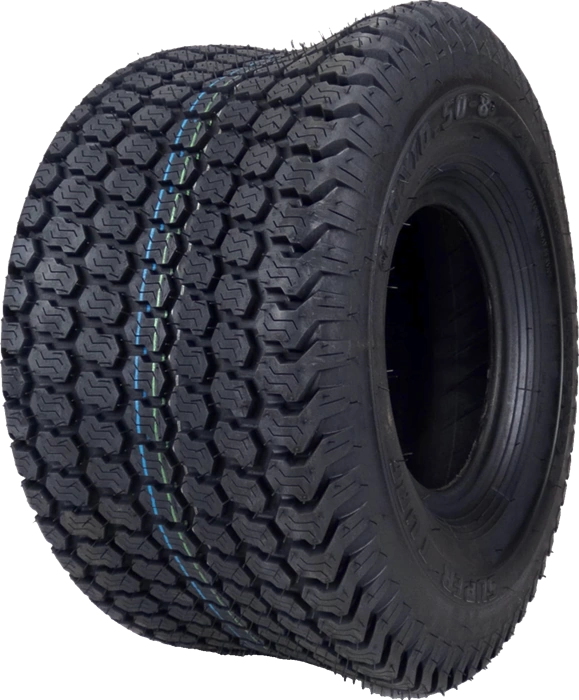

The short answer: 23x10.50-12 means the tire is about 23 inches tall, about 10.5 inches wide, and mounts on a 12-inch rim. Height, width, rim — in that order, every time. It’s one of the most common rear sizes on garden tractors and zero-turns, and we keep it on the shelf in Cleveland.
One warning before anything else, because it causes real ordering mistakes: that last number is the rim’s diameter — the distance across the wheel — not its width. A surprising number of tire guides floating around the internet, including some well-maintained ones, tell you the last number is the rim width. It isn’t. Order off that advice and you’ll be measuring the wrong dimension of your wheel and standing in the garage wondering why nothing matches.
The three-number system, one number at a time
23
- What it is
- Overall height (diameter), inflated
- On this tire
- about 23″ tall
10.50
- What it is
- Section width at the widest point
- On this tire
- about 10.5″ wide
12
- What it is
- Rim diameter — the wheel it mounts on
- On this tire
- a 12″ wheel
The pattern is height x width - rim, all in inches. It’s the friendlier of the two sizing systems small tires use, because unlike two-number sizes (4.80-8 and friends), it actually tells you how tall the tire stands. Once you can read one three-number size you can read them all — our size-reading guide walks the whole system if you want it.
About that last number one more time, since it’s the load-bearing fact of this article: the 12 means your wheel measures 12 inches across at the bead seat. It says nothing about how wide the rim is. Two different 12″ wheels can have very different widths, and this tire fits rims in a range of widths — but the diameter has to be exactly 12. When you’re confirming a match, measure across the wheel, not along it.
What machines take 23x10.50-12
This size shows up wherever a machine needs real footprint out back. The John Deere 318 — the collectible heart of the JD 300 series — runs it as the stock rear, paired with 16x6.50-8 fronts. The Wheel Horse C-160 runs the same rear fitment. On the modern side, Cub Cadet’s RZT 50 zero-turn takes it in the rear too, and some IH-era Cub Cadet 1450s carried it as a dealer option over the stock 23x8.50-12. Same tire, forty years of machines.
If yours is a 318, we wrote the machine its own guide — the John Deere 318 tire guide — covering ply, tread, tubes, and the 26x12-12 variant that fools people.
Turf or lug, in this size
23x10.50-12 is popular enough that you get a genuine choice of tread. Turf — the Kenda K500 Super Turf is the workhorse here — is the factory look and the right call if the machine mows a lawn you care about. A chevron-lug AG tread in the same size bolts onto the same rim and turns the machine into a puller: carts, garden plots, snow blades. The trade-off is tracking on soft grass. The full decision — slope, snow, what the machine does all day — is in turf vs. lug tires, and everything we stock in this size lives on the 23x10.50-12 size page.
A tube note, since most of these machines have some years on them
The tires themselves are tubeless designs and seal fine on a healthy rim. But a lot of the machines wearing this size — the 318s, the Wheel Horses — are thirty-plus years old, and rust pitting along the bead seat is the usual reason one corner won’t hold air over a week. A TR-13 valve tube solves it permanently for less than the gas you’ll burn topping it up all season. If the sidewall’s cracked through, though, the tube is a bandage, not a fix — that tire’s done.
Common questions
Tires in this guide
Sold and shipped by Greater Cleveland Tire — from our Cleveland warehouse in one business day.
Best seller at this size